In the lead up to the election, Grant Shapps promised changes. This week we have seen these changes implemented in a document produced by the Communities and Local Government body
(CGL )called Evaluating the Extent of Rough Sleeping: A new approach http://www.communities.gov.uk/publications/housing/roughsleepingevaluate
New guidelines have been introduced with regards to both counting rough sleepers and undertaking counts. Previously only local authorities that had more than 10 rough sleepers (known as ‘hotspots’) were required to undertake a count. Now all local authorities are required to. However, once a count has been done, local authorities can decide how they supply the information, including the option of providing an estimate rather than an actual count number. Within these guidelines, there have also been changes to the way rough sleepers are counted. For the first time those that look like they are about to bed down, as well as those in tents, can be included within the count.
What difference will these changes actually make to the way we tackle homelessness? The new figures produced by these guidelines will show a more accurate indication of the number of rough sleepers, but will there be any extra support for the services working with this client group, or will we continue to see more and more cuts in funding?
Sunday, 19 September 2010


Sunday, 12 September 2010
The Expulsion of Homeless EEA Nationals.
The Roma people and many others have left their native countries and moved legally to a fellow EU Member state in search of a better and more prosperous life. Many of these people are, however, unable to find work and are soon perceived to be placing a burden on their new country.
It is clearly evident that many people who find themselves in this position are desperate to avoid deportation to their native country. A fact best demonstrated by reports of outreach workers finding people cooking and eating rats just to survive(see link - http://www.insidehousing.co.uk//6511126.article).
An inevitable result of this situation is an increase in the number of rough sleepers as people at risk of 'disappearing' in an effort to avoid deportation.
As a long established EU Member should the British Government take responsibility for these people and provide them with the same benefits and services as a British Citizen? Or, are they just an additional burden on Britain?
Monday, 6 September 2010
Are we supporting homeless ex-service men and women enough?

When completing housing and hostel referral forms, very few request information about serving history, discharge or even mention service personnel. We look at providing support for many of the bi-products related to serving in the forces, such as mental health issues, alcohol or drug abuse. But, we fail to acknowledge institutionalisation which can make 'civi street' very hard to cope with and life in general.
Although there are services to assist ex-service men with everyday issues, such as SSAFA, we as outreach workers do not specialise in this specific need as some may in mental health or addictions. I doubt that many workers have been offered training around such an issue.
How can we best prepare ourselves to effectively support ex-service men and women, so that we can assess their needs thoroughly and access services effectively?
(picture by Stuart Griffiths© , http://www.stuartgriffiths.net)
Tuesday, 31 August 2010
Homeless Clients and Dogs
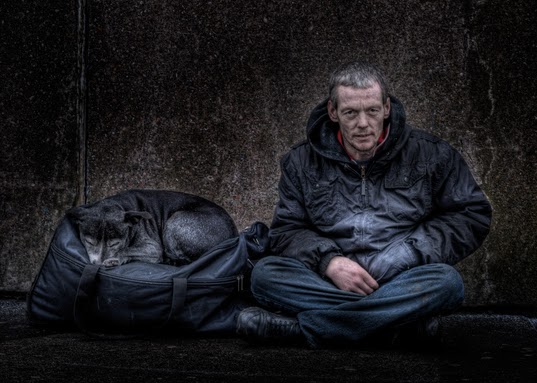
For many rough sleepers parting with a dog is inconceivable. We know that the relationship between an owner and a dog can be a strong one, providing an emotional bond, personal safety and security, it can alleviate loneliness and even raise self esteem. There are some very good services which support homeless clients to look after their pets, such as The Dogs Trust with their Freedom Project and Hope Project (www.dogstrust.org.uk).
So many hostels still refuse clients with pets, while those that do, have waiting lists.
However there is always more than one side of the story. What about those that have dogs, yet show them very little affection and care? Or clients that are struggling to look after themselves, let alone another being.
Should we be calling the RSPCA or the Dog Warden and what can they actually do? Or should we take matters into our own hands?
(picture by Matthew Halstead http://matthewhalstead.com/ )
Subscribe to:
Posts (Atom)

